Baltimore’s City Council is again considering legislation that could change the way residential properties are developed and used in Bolton Hill. The proposed Accessory Dwelling Unit (ADU) legislation, Bill 26-0195, would allow additional residential units on property throughout the city, including the rowhouses that make up much of our neighborhood.
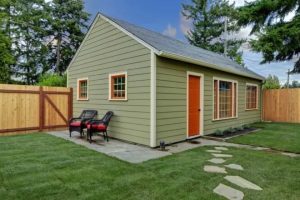
ADUs are generally smaller, independent living units located on the same property as a primary residence, often described as in-law suites. Sometimes garages or carriage houses become ADUs. Last year the state passed a law requiring local governments to permit ADUs on properties with detached single-family houses. Baltimore’s proposed legislation, introduced by Councilmember Ryan Dorsey, goes further, extending those development opportunities to rowhouses and other properties.
The legislation raises important questions for established neighborhoods such as Bolton Hill, where residential development has long been guided by policies intended to preserve a balance of homeowners and renters, maintain available parking and protect historic architecture. BHCA has not taken a position on the new proposal but has in the past only favored dividing large properties or adding an extra unit when the property owner resides there. Dorsey’s bill has no such requirement.
The neighborhood’s two councilmembers appear to be split on the original bill. District 11’s Zac Blanchard, representing the south end of Bolton Hill, is supportive, while James Torrence, whose 7th district runs north of McMechen Street, is opposed. The bill is similar to last year’s Housing Options and Opportunity Act (CCB 25-066) that was opposed by BHCA and was never forwarded to City Council. That act was proposed by Dorsey and attempted to expand the rental housing supply by allowing conversion of most single-family homes to as many as four rental units.
The bill advanced to City Council on Sept. 26 and received a tie vote, and was referred back to the Land Use and Transportation Committees for a meeting now scheduled for 9 a.m. on Oct. 22. The legislative file is available online. A total of 11 written public testimonies, all in opposition to the bill, have been submitted. No agenda or updates are currently available for the Oct. 22 meeting. If the committee moves it, the bill could go to the full council as early as Oct. 26.
–James Prost and Dolph Druckman
